
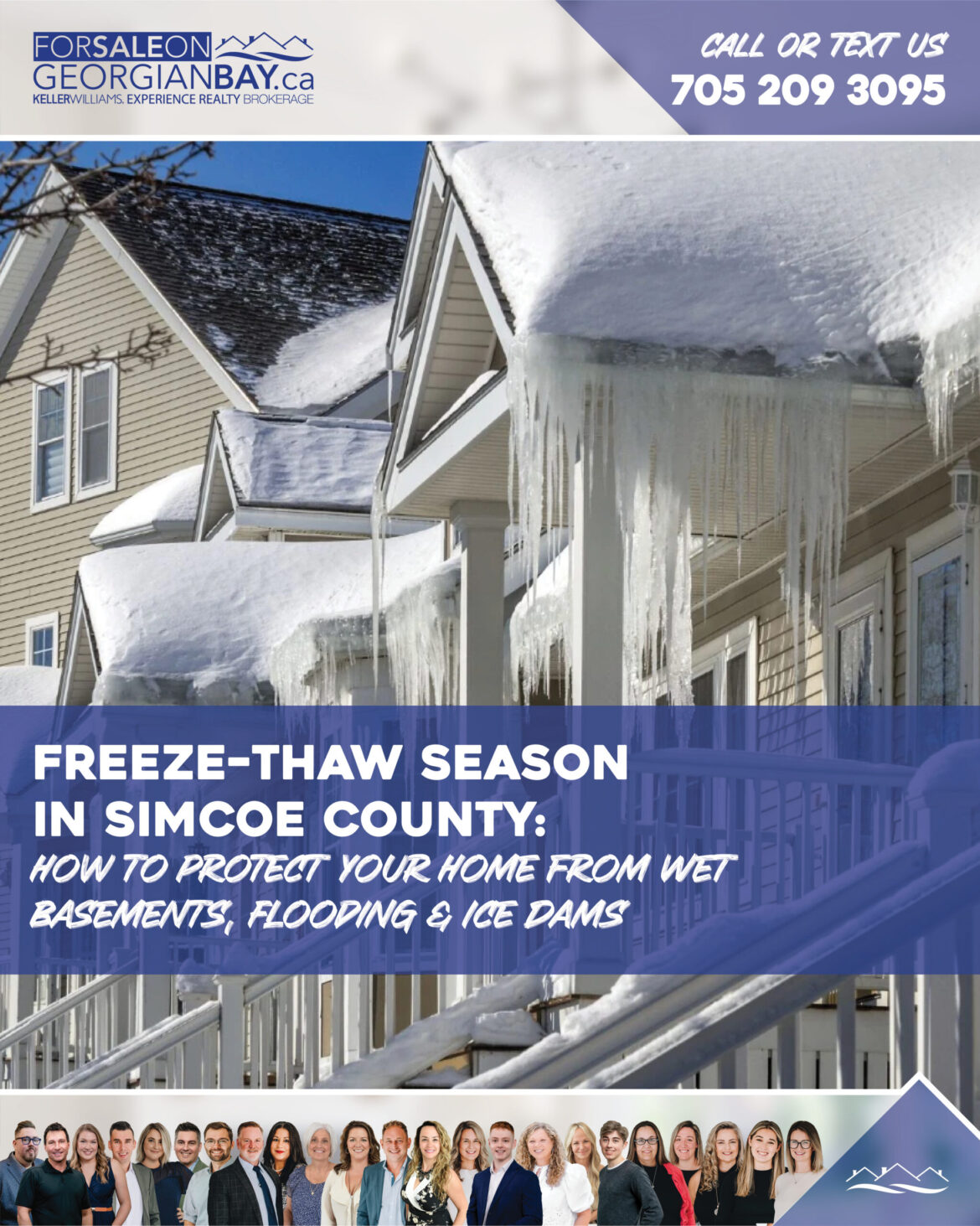
If you live near Georgian Bay, you know this stretch of winter isn’t gentle. One afternoon it’s melting snow and dripping eaves. By nightfall, everything is locked back in ice.
That constant thawing and refreezing does more than make sidewalks slippery. It quietly stress tests your home.
Here’s how to stay ahead of it.
Clear Snow Away from Your Foundation

When the snow starts to melt, all that water has to go somewhere. If snow is piled tight against your foundation, you’re essentially guiding it toward your basement walls.
This time of year, we always recommend pulling snow back at least a couple of feet from the foundation, especially around window wells. It seems simple, but it’s one of the most effective ways to reduce the risk of seepage during heavy melts. Water will always follow the easiest path. The goal is to make sure that path leads away from your home, not into it.
Pay Attention to Your Downspouts

During freeze–thaw season, your eavestrough system suddenly goes from dormant to working overtime.
Take a look at where your downspouts are directing water. If they’re dumping meltwater right beside the foundation, that water can pool, freeze overnight, and repeat the cycle the next day. Over time, that constant pressure increases the chance of moisture finding its way inside.
Ideally, downspouts should extend several feet away from the house so water has time and distance to disperse safely.
Watch for Ice Dams on the Roof

Ice dams often start quietly. Snow melts on the warmer upper portion of your roof, runs down toward the colder eaves, and refreezes. Eventually, a ridge of ice forms and traps water behind it. That water can back up under shingles and into the attic.
If you notice thick icicles lining the roof edge or damp spots appearing on ceilings during warmer afternoons, it’s worth investigating. Long term, proper attic insulation and ventilation are the real solution. In the short term, safely removing excess snow buildup along roof edges can reduce the risk.
Make Sure Your Sump Pump Is Ready
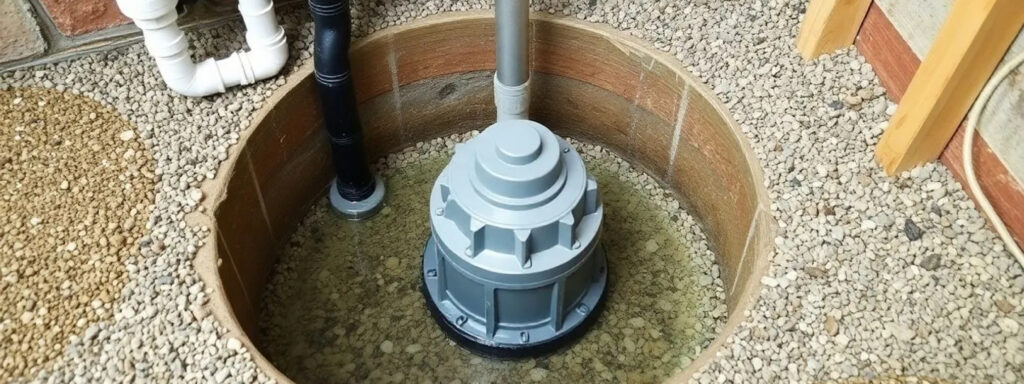
This is prime time for sump pump issues. If you have one, now is the time to test it, not during a heavy melt.
Pouring a bucket of water into the pit should trigger it to activate. It’s also important to check that the discharge line outside isn’t frozen or blocked. During rapid thaws, your sump pump may be the only thing standing between a dry basement and a very expensive cleanup.
Take a Walk Around Your Property

As snow melts, you’ll quickly see where water naturally pools. Pay attention to soggy patches near the foundation or low spots around window wells.
Homes in our communities experience strong freeze–thaw swings because of our proximity to the bay. Over time, minor grading issues can become bigger drainage problems. Catching them early makes all the difference.
Comments (0)